Tree Ear: making art, listening and responding to a place in a time of rupture
By Katie Harris-MacLeod
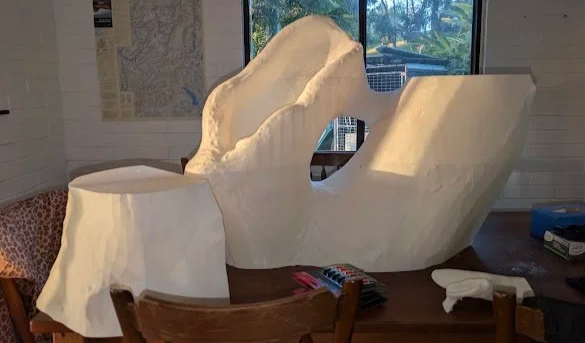
Things are beginning to take shape with Tree Ear.
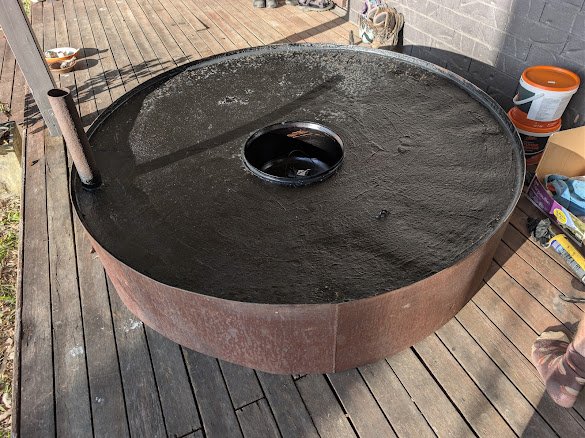
The sculpture is now just over halfway through its 3D printing process, while the accompanying corten steel sound bath is being waterproofed. This weekend I will return to the Wallum and Noosa Everglades to continue recording; sound, video, birds, plants, water, movement, and whatever else emerges through the process. The wildflowers are currently in bloom, and the abundance of birdlife makes this particular moment feel especially important to document.
The Noosa Everglades are home to more than 40% of Australia's bird species, making the region an extraordinary site of biodiversity and ecological significance. Australia is now experiencing an expanding outbreak of H5 bird flu in wild birds. As of 30 August 2026, the Australian Government had recorded 421 positive cases nationally.
I find myself recording these places with a heightened awareness that what I am listening to may not always sound like this.
This has become an increasingly important part of Tree Ear.
Making in a time of ecological crisis
One of the questions that has emerged through the making of this work is:
How do we, as artists and makers, make new work in a time of ecological crisis and extreme rupture?
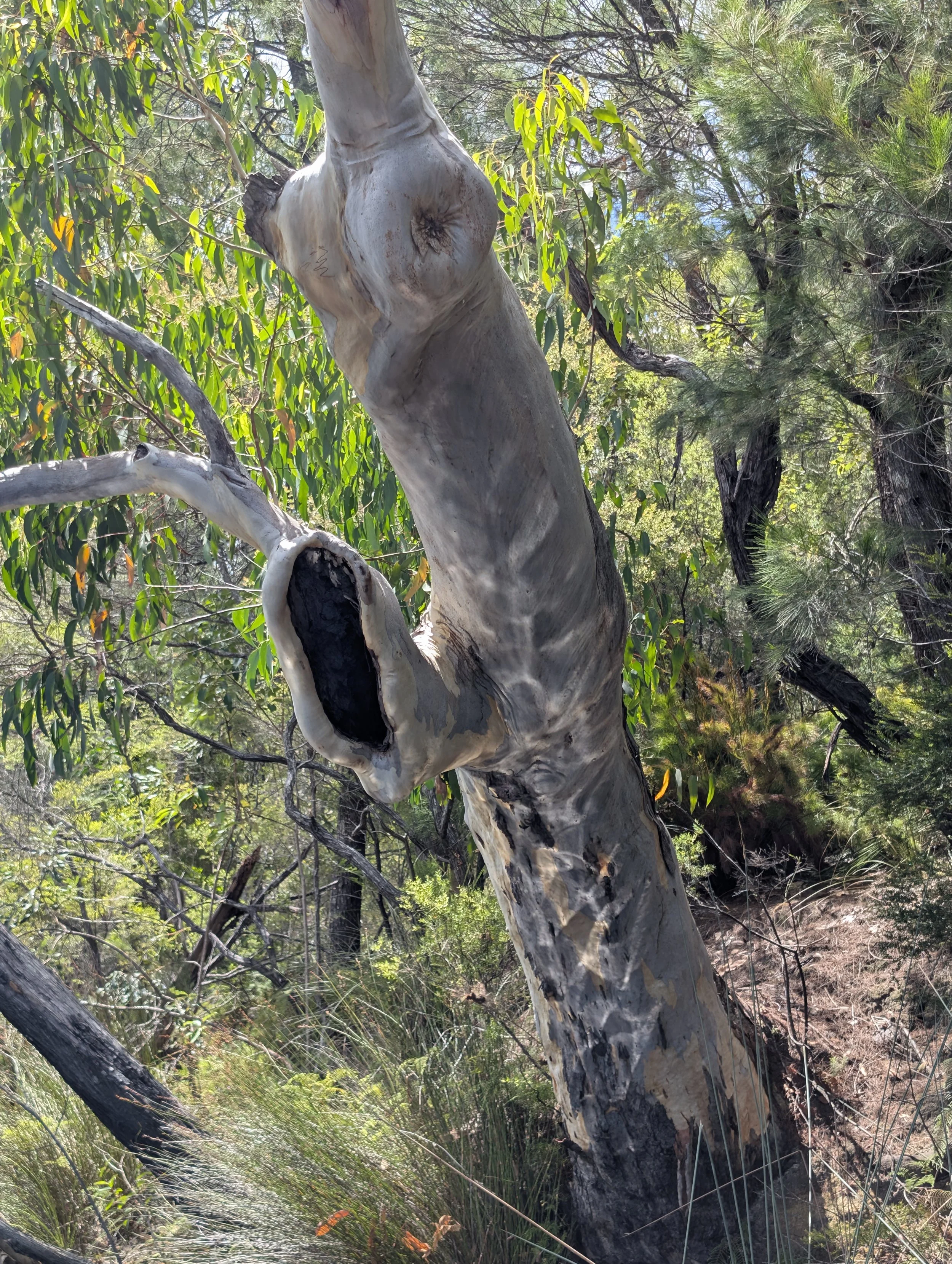
It is a question that became particularly tangible while watching a large 3D-printed sculpture slowly emerge layer by layer. The technology has enabled something that would otherwise have been impossible, allowing me to translate a scanned tree hollow into a new sculptural form. But alongside the excitement of this process came another thought: what happens to this artwork when the exhibition is over?
I have become increasingly conscious of the afterlife of the physical artworks I make.
Outside of the 3D printing, each component of Tree Ear is either secondhand, recycled or repurposed. This is becoming increasingly essential to my approach to making. I am interested in how artworks might be constructed from materials that already exist, or from biological materials that can eventually return to ecological systems.
The 3D printing process has opened up another line of research altogether. I have begun investigating whether fungi might be capable of breaking down cornstarch-based printing filaments. What initially began as a practical question about the future of one sculpture could become an entirely new project: what would it mean to design an artwork with its decomposition already embedded within it?
Perhaps an ecological artwork should not only speak about environmental systems, but participate in and return to them.
Relinquishing control
Technology has also required me to relinquish a certain amount of control.
This has been challenging.
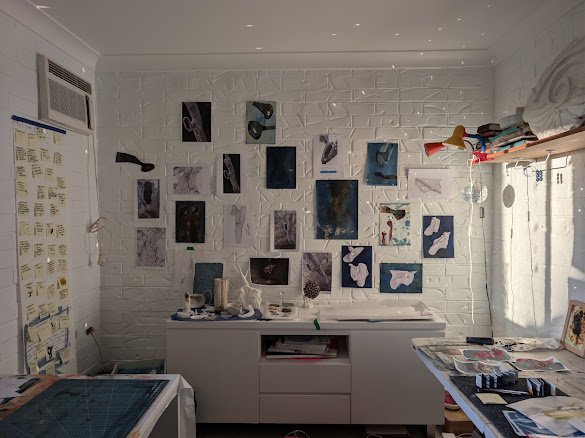
My practice has historically been deeply material based and embodied; collecting, foraging, drawing, painting, listening, walking and making with materials gathered from particular places. Tree Ear has introduced a very different set of processes: 3D scanning, digital modelling, 3D printing, sound technology and spatial experimentation.
The translation from tree hollow to digital object to physical sculpture is never exact. Something is always lost, distorted or transformed along the way.
But this loss of control has also become one of the most productive aspects of the project.
I would not have been able to move through this process without the incredible support of the technicians at the Merks Space, UniSC. Their knowledge has allowed me to enter technological territory that was previously unfamiliar, while also encouraging me to think differently about what my practice can become.
Technology, in this sense, is not simply a tool for producing the work. It has become part of the research itself.
Listening before it disappears
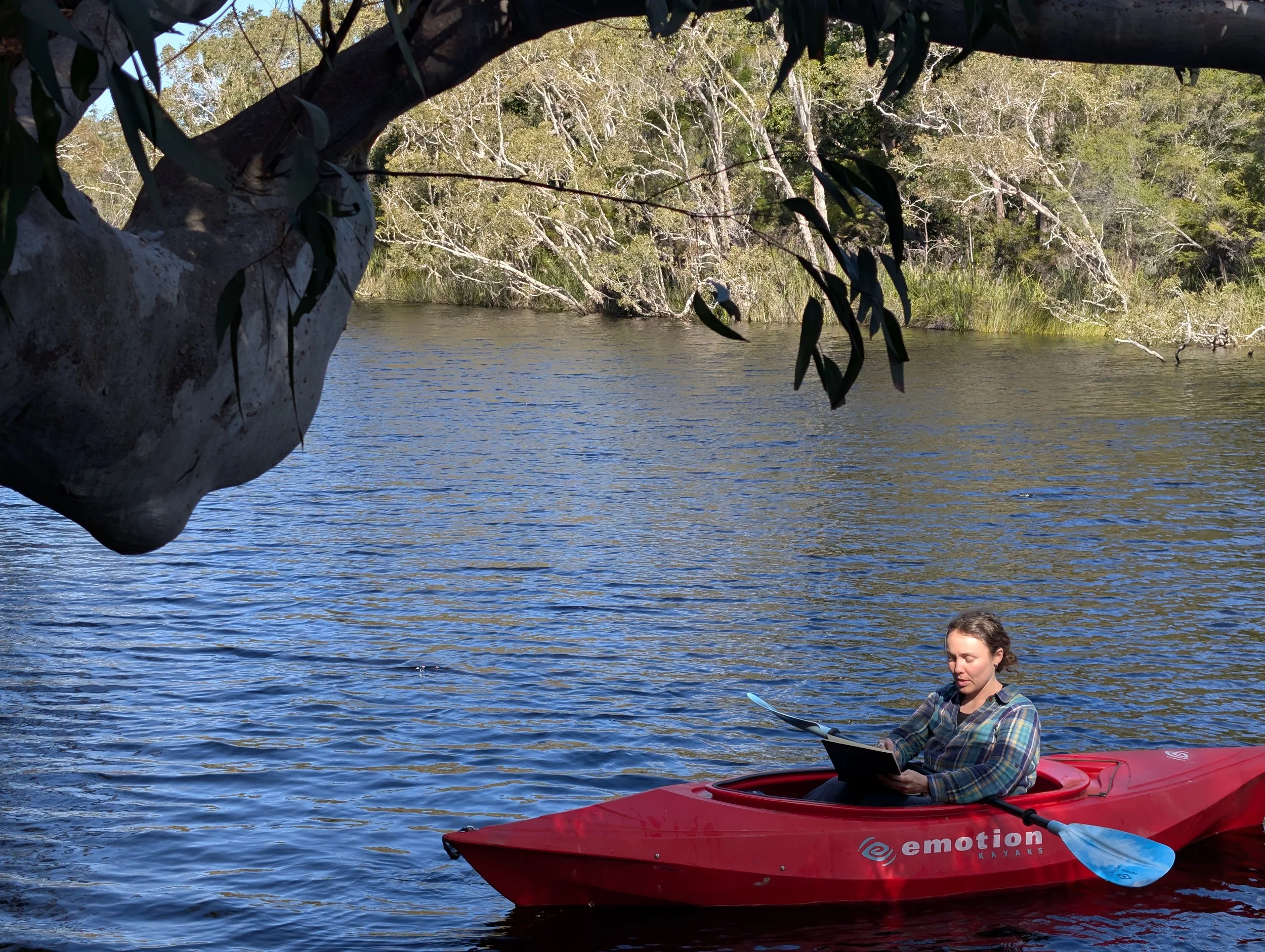
Throughout the residency I have been returning to the Noosa Everglades with a Zoom recorder, collecting fragments of the sonic environment: birds, insects, bats, water, wind and the subtle movements of the surrounding landscape.
Among these recordings are the calls of black cockatoos, birds whose evolutionary histories stretch back more than 40 million years. The knowledge that these voices are now potentially vulnerable to an emerging ecological threat has changed the way I listen.
It has been difficult not to let this knowledge affect the work.
The themes of ecological crisis, grief and intimacy feel even more urgent now than when I first submitted the residency proposal.
But perhaps this is precisely what the work needs to do.
Tree Ear is becoming a way of paying attention to a place as it is now. It is a document of a particular ecological moment, but also a poetic offering to place. The recordings, images and sculptural forms become fragments of an ecosystem that is constantly changing; and potentially facing significant rupture.
There is an urgency here to create eco-political work that does not simply represent the unfolding ecological crisis from a distance, but emerges through sustained attention, intimacy and listening.
From one river to another
It has been wonderful to have the time and resources to work deeply within the surrounding biospheres, particularly the Noosa Everglades.
I feel as though I have developed a kind of river fever this year.
I have travelled from one river to another: from the Queen River on the wild West Coast of Lutruwita/Tasmania, shaped by mining, toxicity and industrial histories, to the slow-moving waterways of the Noosa Everglades, shaped by dark tannin stained water, tea trees, gnarly old gums, Cyprus pines, wetlands and an extraordinary diversity of life however, in the not too distant past these precious ecosystems too experienced ecological violence and extraction, something I believe we often forget in the present moment here in this region. What could this place have been like if we just let it be as it was before the suffocation and irrevocable extremes of colonialism?
There is something in this repeated compulsion towards rivers that I am still trying to understand. Perhaps there is a lesson in these wild watery places.
Perhaps it is simply that, now more than ever, we need to spend time with these environments, to sit beside them, move through them slowly, and listen to the many beings that inhabit them. To reclaim our collective ability to listen and observe at a time scale our bodies can actually grasp without overwhelm and the constant overload of anthropological sensory input.
The Tree Ear sculpture has become a listening body: part tree, part ear, part technological apparatus, part archive. Twenty-eight 3D printed pieces of a part of a tree and its ancient hollow, segmented and then stuck back together to create an artwork that emulates the fragmentation of this strange techno-human world we find ourselves in.
The final installation is beginning to emerge around this idea.
The result will not attempt to reproduce the Everglades literally, but create something stranger: a sonic body, somewhere between landscape, memory, listening and a rebellious reclamation of the ability to be present again.
my body
her body
river speak
listen
Image credits: All images are courtesy of the artist Katie Harris-MacLeod